repair is more important than getting it right

There’s a moment most of us know well. You say something too sharply. You misread a tone. You send the email you wish you could pull back. You snap at your spouse or child. You go quiet when you know you should speak up.
And then comes the familiar internal anxious spiral:
“I ruined that.”
“I should’ve handled that better.”
“Why am I like this?”
As anxious achievers, we are often more committed to getting it right than staying connected.
Just me?
But here’s a truth I want you to sit with:
Repair is more important than getting it right (or getting even).
Getting it “right" is about perfection.
Getting “even” is about revenge.
Repair is about relationship.
And relationship is what builds legacies and connection.
Where many of us learned it wrong
If you grew up in a home where conflict was loud, cold, avoidant, or simply never addressed, you likely absorbed one of two messages:
Conflict means danger.
Or
Conflict means someone must win.
So now, as adults, we tend to default to one of three patterns:
1. Over-explaining and over-functioning to avoid conflict altogether.
2. Shutting down and ghosting when something feels tense.
3. Getting even, proving our point, or subtly punishing.
All of these are nervous system responses.
Fight.
Flight.
Freeze.
And none of them build long-term safety or sustainable, healthy, fulfilling relationships.
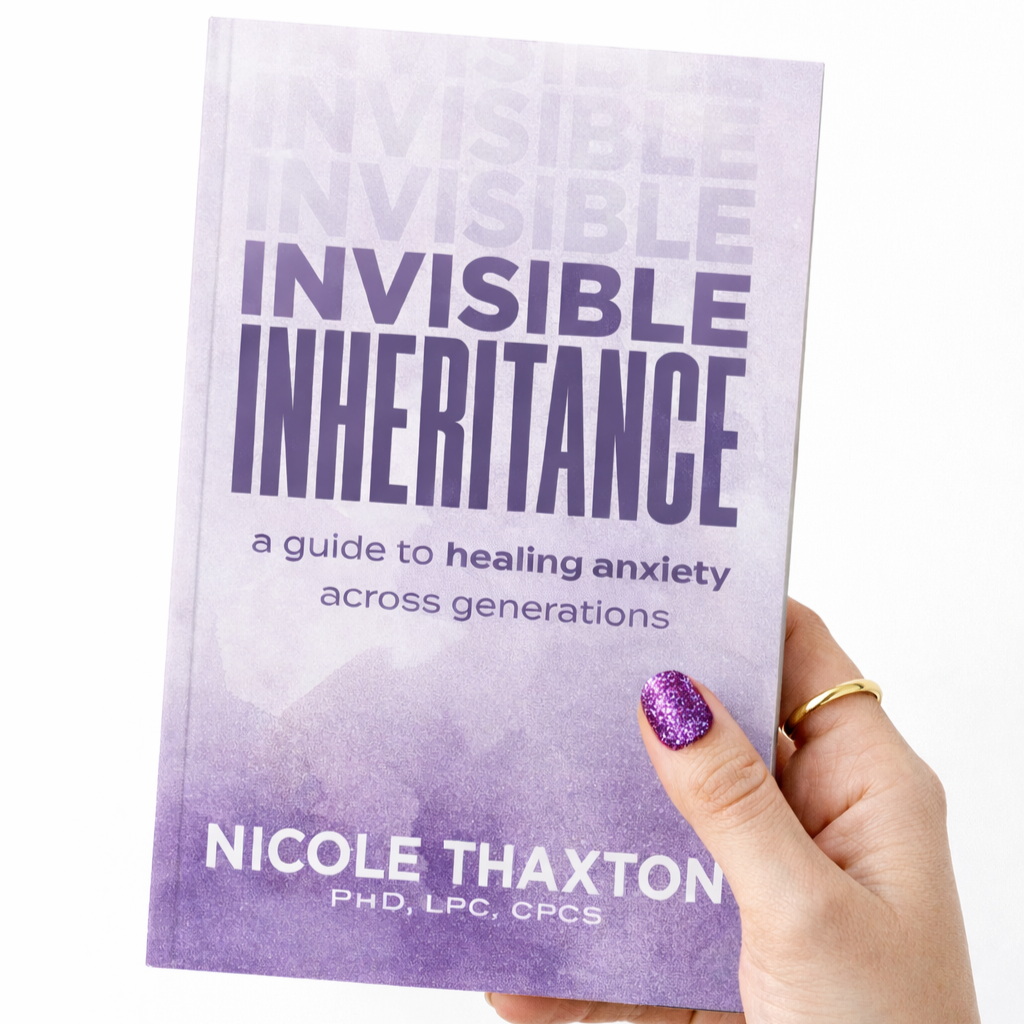
One of the central themes in my upcoming book, Invisible Inheritance, is this:
We don’t just pass down anxiety through hyper-vigilance and perfectionism.
We pass it down through how we handle ruptures.
Because every close relationship will experience ruptures.
The question isn’t if conflict will happen.
The question is what we do next.
Why repair matters more than perfection
Research in attachment theory and conflict resolution consistently shows something powerful:
It’s not the absence of conflict that creates secure relationships.
It’s consistent, meaningful repair.
Children don’t need perfect parents.
They need parents who come back, apologize, and lean in.
Partners don’t need mind-readers or people-pleasers.
They need a partner or spouse who will keep showing up to have the hard conversations.
Teams don’t need leaders who never make mistakes.
They need leaders who own them and communicate.
Repair teaches something perfection never can:
We can disagree and still stay connected.
We can hurt and still heal.
We can rupture and still return.
That is emotional safety.
And emotional safety is what builds generational health.
Repair is not:
“I’m sorry you feel that way.”
Silence and hoping time erases it.
Buying a gift instead of having a conversation.
Avodiance.
Keeping score.
Over-apologizing.
Repair is:
Naming what happened.
“I raised my voice earlier.”
“I shut down in that conversation.”
“That email came off harsher than I intended.”Owning your part without defensiveness.
Not explaining it away.
Not blaming stress, the kids, or the deadline.Making space for the other person’s experience.
“How did that feel for you?”
“I want to understand.”Re-committing to the relationship.
“You matter more to me than being right.”
Repair requires two active participants.
One willing to initiate.
One willing to engage.
And yes, sometimes the other person isn’t ready. That’s real. Repair can’t be forced. But showing up with humility changes relational patterns over time.
Why ghosting and “getting even” feel easier
When conflict hits, your nervous system wants relief. Ghosting offers quick relief. Winning the argument offers quick relief. Withdrawing affection offers quick relief. But relief isn’t the same as repair.
Avoidance keeps anxiety alive. Revenge keeps resentment alive. Silence keeps distance alive.
Repair, though uncomfortable, lowers anxiety long-term because it restores connection.
And connection is regulating.
Behind the scenes of this book theme
As I wrote Invisible Inheritance, one pattern kept surfacing in different forms. Many high-functioning adults didn’t just inherit anxiety. They inherited un-repaired relationships.
A parent who never apologized.
A marriage that operated in silent tension.
A workplace culture where mistakes meant shame instead of growth.
What shaped them most wasn’t the conflict itself.
It was the absence of repair.
Because when we choose repair, we interrupt the anxious inheritance.
We show our children:
Conflict is survivable and okay.
We show our partners:
Pride is not more important than intimacy with you, connection with you.
We show our teams:
Accountability builds trust.
Let’s make this practical.
In personal relationships: Instead of waiting for the other person to make the first move, send the text. Initiate the conversation.
In parenting: After a hard moment, circle back at bedtime. “Earlier today didn’t feel good to me. I want to try again.”
At work: If tension lingers after a meeting, schedule five minutes to clear it. Make the phone call. Clarity reduces anxiety more than avoidance ever will.
Repair doesn’t erase what happened.
It transforms what it means.
And that transformation builds secure attachment—at home, in leadership, and within ourselves.
The legacy question
If anxiety can be passed down through unspoken tension and unhealed rupture…
What could be passed down through humble repair?
Imagine a child who grows up hearing:
“I was wrong.”
“Thank you for telling me.”
“Let’s try again.”
Imagine a team culture where mistakes are addressed, not buried.
Imagine a marriage where neither person has to win to feel safe.
That is how emotional legacies change.
Not by getting it right every time.
But by coming back.
Before you move on today, reflect:
Where in my life is there a small rupture I’ve been avoiding?
What would it look like to initiate repair?
What legacy am I building through how I handle conflict?
Invisible Inheritance explores this deeply—how anxiety travels through generations not just in hyper-vigilance, but in relational patterns. And more importantly, how intentional repair can rewrite those patterns.
We are getting closer to launch every week now. Less than two months. And as I finalize pages, I keep thinking about this:
We are not responsible for never rupturing.
We are responsible for what we do after we do.
You don’t have to be perfect to build a healthy emotional legacy.
Thank God.
LATEST NEWS:
My debut book is available for preorder: Invisible Inheritance: A Guide to Healing Anxiety Across Generations.
I speak to leaders, parents, and (small and large) organizations about emotional endurance, work-life blend, high-functioning anxiety, and sustainable leadership.
If this reflection resonates with your team or community, you can learn more about bringing this work to your organization here:
Thanks for reading! Want more writings and resources?
Here are a few blog posts you might enjoy:
001. Read me if you want more vision casting tips and tools
002. Read me if you're struggling with anxiety
003. Pre-order my debut book now!
004. Join the weekly newsletter for resources, essays, and encouragement.
Disclaimer: This blog is not intended to substitute professional therapeutic advice. Talk with your healthcare provider about your health concerns and before starting or stopping therapies. No content on this site, regardless of date, should ever be used as a substitute for direct professional advice from your doctor or other qualified clinician.