small shifts for anxious parents

Last week, I noticed something subtle but telling.
One of my daughters dropped her cup at dinner. It spilled everywhere. Before I said a single word, she looked straight at my face—not at the mess. Not at the floor. At me.
She wasn’t listening for my response.
She was scanning for it.
And in that split second, I was reminded of something we don’t talk about enough:
Our kids feel our nervous systems before they understand our language.
They read our breath.
Our tone.
The speed of our movements.
The tension in our shoulders.
Long before they can interpret our explanations about “it’s okay” or “mistakes happen,” they are interpreting us.
And that realization is both humbling and hopeful.
Because it means the legacy we pass down isn’t just made of words.
It’s made of regulation.
In the counseling work I’ve done clinically—and in the deeply personal work I’ve done within my own story—this truth has become clear:
We don’t pass down trauma itself.
We pass down nervous systems that learned how to survive it.
The hyper-alertness.
The over-functioning.
The scanning for what could go wrong.
The urgency disguised as productivity.
When we become parents (or leaders), that wiring doesn’t disappear. It simply gets projected into love.
We rush because we’re anxious.
We correct quickly because we’re overstimulated.
We over-explain because we’re afraid of being misunderstood.
Our children don’t need us to eliminate anxiety.
They need us to show them what to do with it.
What your nervous system is teaching
A child doesn’t need a neuroscience lecture.
But their body is constantly learning:
Is the world safe?
Are mistakes survivable?
Do big feelings overwhelm us—or can we move through them?
The answer they internalize often comes not from our scripts… but from our regulation.
A slowed breath.
A softened tone.
A pause instead of a snap.
These moments feel small.
But they are generational.
Behind the scenes of Invisible Inheritance
As I’ve been writing Invisible Inheritance (and I still can’t believe we’re less than two months from launch), this theme kept surfacing again and again in the two interviews I conducted for the book. The theme also surfaced in my clinical work.
Over the past ten years, I've counseled individuals who bravely shared their stories—stories of high achievement, quiet anxiety, hyper-vigilance, and the deep desire to “do it differently” for their own children.
There were moments while writing this book where I had to pause because the weight of what was being written down felt so tangible. What people share with me is this:
Not always dramatic trauma stories.
Not headline-making events.
But nervous systems shaped by:
A parent who was always overwhelmed or stressed out or rushed.
A household where emotions felt overwhelming.
An atmosphere of pressure no one named.
And the most powerful thread?
Some version of:
“I don’t want my kids to carry this.”
That sentence became fuel for this book.
It's been a thought that I've had so many times on my anxiety journey.
Writing Invisible Inheritance has been one of the most vulnerable professional experiences of my career. It weaves together clinical experience, generational patterns, narrative storytelling, and my own personal reflections as a mother and anxious achiever.
It’s not a book about blame and shame.
It’s a book about empowering ourselves.
Because once we understand that anxiety travels through regulation—not just our words—we realize something profound:
Calm can travel too.
Passing down emotional health
If the “why” of this work is clear, it’s this:
We are not just trying to manage anxiety.
We are trying to pass down emotionally healthy legacies.
That doesn’t mean never feeling anxious.
It means learning how to regulate in front of the people watching us most closely.
Here’s what that looks like in real life:
Narrating your reset. “Mommy feels frustrated. I’m going to take a breath.”
Repairing quickly. “I raised my voice. That wasn’t how I wanted to handle that.”
Practicing embodied calm. Longer exhales. Slower movements. Eye contact.
You are teaching safety through repetition.
And even if anxiety has traveled through five generations before you, it can quiet in yours.
Before you move on to the next responsibility today, pause for a moment and reflect:
When I’m stressed, what does my body (and my actions) communicate to the people around me?
What did my caregivers’ nervous systems teach me about safety?
What is one small regulation practice I can model this week?
Remember:
Breaking generational anxiety rarely happens in one dramatic breakthrough.
It happens in thousands of regulated micro-moments.
A slower exhale.
A softer response.
A choice not to escalate.
A choice to slow down.
A choice to look inward.
That is how invisible inheritances shift.
Invisible Inheritance launches in less than two months now. Every week that passes, I feel both anticipation and excitement. I feel emotional. This book was created not only from research and a decade of clinical experience, but from real stories—real nervous systems—real people longing for something freer.
If you’ve already pre-ordered, thank you. You are part of this legacy work.
If you haven’t yet, you can learn more and pre-order on my website. I truly cannot wait to place this into your hands.
LATEST NEWS:
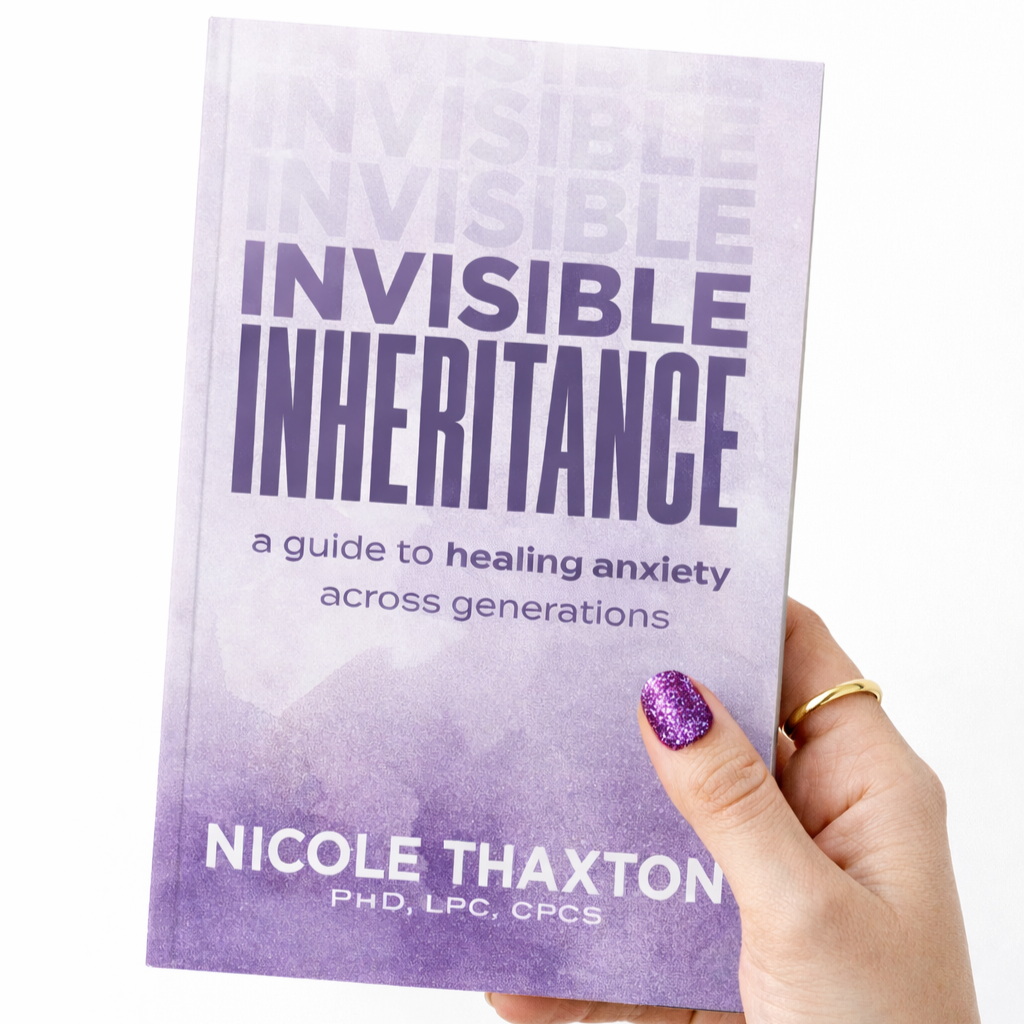
My debut book is available for preorder: Invisible Inheritance: A Guide to Healing Anxiety Across Generations.
I speak to leaders, parents, and (small and large) organizations about emotional endurance, work-life blend, high-functioning anxiety, and sustainable leadership.
If this reflection resonates with your team or community, you can learn more about bringing this work to your organization here:
Thanks for reading! Want more writings and resources?
Here are a few blog posts you might enjoy:
001. Read me if you want more vision casting tips and tools
002. Read me if you're struggling with anxiety
003. Pre-order my debut book now!
004. Join the weekly newsletter for resources, essays, and encouragement.
Disclaimer: This blog is not intended to substitute professional therapeutic advice. Talk with your healthcare provider about your health concerns and before starting or stopping therapies. No content on this site, regardless of date, should ever be used as a substitute for direct professional advice from your doctor or other qualified clinician.