parenting without passing down your anxiety
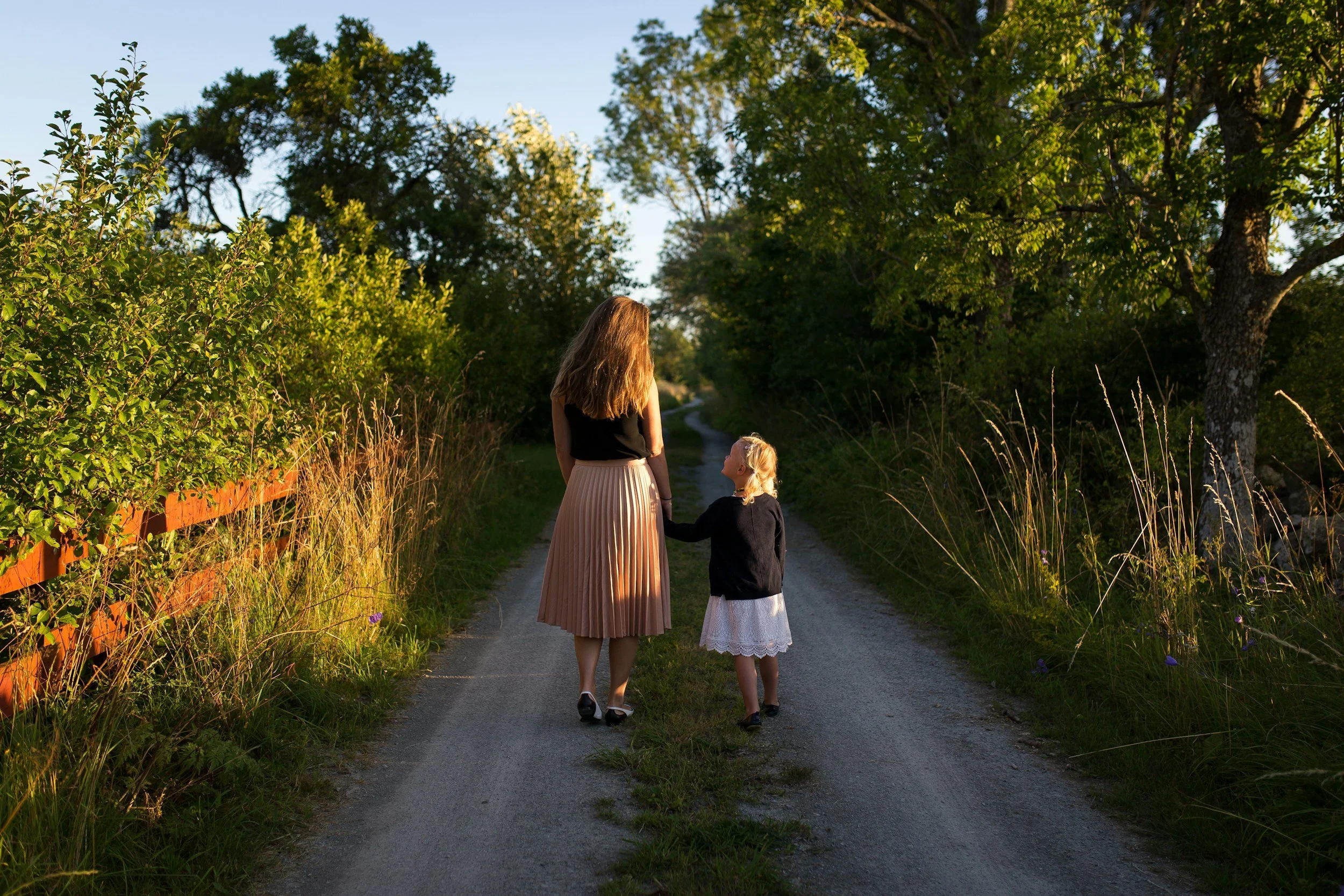
Last night, I had an intrusive thought pop in, a simple question, while getting my two young daughters ready for bed:
“Everything is going so well. How can I know if something bad is going to happen?”
It was one of those quiet, ordinary thoughts that somehow holds a thousand layers underneath it.
Because the honest answer—the one many of us learned growing up—sounds something like:
You watch carefully.
You stay vigilant.
You prepare for everything.
You stay one step ahead, so nothing can surprise you.
In other words:
You stay anxious… so everyone stays safe.
But standing there last night in my two-year-old daughter's room, I felt the whisper of a different truth I’ve been learning slowly, gently, imperfectly since becoming a mom:
Our children don’t need our anxiety to keep them safe.
They need our calm to show them they already are.
And that realization has been reshaping the way I think about parenting, leadership, and even healing itself.
The inheritance we don’t mean to give
Most conversations about “generational trauma” focus on the events that happened in families. But what I’ve come to believe—both clinically and personally—is this:
We don’t pass down the trauma itself.
We pass down the nervous systems that learned how to survive it.
The hyper-vigilance.
The over-functioning.
The perfectionism dressed up as responsibility.
The constant scanning for what could go wrong.
To the outside world, it looks like strength and composure.
Achievement.
Leadership.
Success.
But inside, it often feels like never fully exhaling (or resting).
And when we become parents, something shifts. All parents will understand this. We don’t just want to succeed anymore. We want our children to feel free. Free from the pressure. Free from the fear. Free from the invisible urgency we’ve carried for years.
Yet anxiety has a quiet way of sneaking into love.
We hurry them because we’re afraid of being late.
We correct them (or shrink them) because we’re afraid of judgment.
We protect them because we’re afraid of pain.
All deeply understandable.
All deeply human.
And still…not the legacy we truly want to leave.
The small moment that changes everything
So back to the bedtime question.
“How do I know if something bad is going to happen?”
For a split second, my old wiring tried to answer.
The part of me that learned early to anticipate, prepare, manage, control.
But instead, I took a slow breath.
The kind of breath that feels almost too simple to matter—until it does.
And I said quietly to myself as I sat with my daughters:
“Most of the time, we don’t know. I can't know what's coming or if something bad is around the corner. But I know I can handle whatever comes. And right now, we are safe.”
In that moment of reframe, I sat there realizing something profound:
Calm is teachable.
Safety is transferable.
Healing is observable.
Not through perfect parenting.
Not through never feeling anxious again.
But through what we choose and model in the ordinary moments.
This morning in my yearly Bible reading plan, I read Exodus 33. I’ve read Exodus a dozen times before, but today this passage felt different—like it was waiting for me to notice it.
Moses has just finished meeting with the Lord for forty days and forty nights. After more than a month of isolation, he returns to his people carrying both responsibility and uncertainty. In verse 12, Moses says to the Lord, “You have been telling me, ‘Lead these people,’ but you have not let me know whom you will send with me. You have said, ‘I know you by name and you have found favor with me.’”
For many chapters now, Moses has been called to lead the Israelites—first out of slavery in Egypt, and now toward the promised land. And if you know Moses’ story, you know he is not a confident, unquestioning leader. He asks how, and why, and who. Even before returning to Egypt in obedience, he wrestled with doubt about whether he was the right person for the job (see chapter 4).
God’s response is what stopped me this morning.
In Exodus 33:14, the Lord replies to Moses, “My Presence will go with you, and I will give you rest.”
I looked up the word rest—because rest, and giving ourselves permission to rest, is something we talk about often here in The Anxious Achievers Club. And what I discovered is that this rest isn’t simply physical relief. It points to something deeper: a profound sense of security, peace, and spiritual comfort that comes from not carrying everything alone.
And as I sat with that definition, I realized something important:
This is the kind of rest us anxious achievers are actually searching for.
Not just a break in the schedule, but soul-rest—relief in our nervous system.
Not just time off or downtime (although both are great), but the felt sense of being safe, held, and not solely responsible for the outcome.
Which brings me to a question many of us don’t ask out loud:
If, as we journey, we are still learning how to live from rest and peace instead of anxiety…what are we passing down to the people who are watching us most closely? To the ones we lead, parent, and love?
Because the way we carry pressure, uncertainty, and fear doesn’t stop with us.
It becomes the emotional atmosphere our children grow up breathing.
And that’s where the deeper work begins, learning how to parent and lead others without passing down our anxiety.
Parenting without passing it down
If you’re an anxious achiever raising children—or leading teams, loving people, building something meaningful—this is the journey in front of us:
Not eliminating anxiety.
But interrupting its automatic inheritance.
Here’s what that can look like in real life:
Letting your children see regulation.
They don’t need a perfect parent.
They need a parent who breathes, pauses, resets, and keeps going.Choosing presence over performance and over-functioning.
Your calm attention is more impactful than your flawless planning and execution.Saying “you’re safe” out loud, until your nervous system believes it too.
Because the truth is…
Many of us are learning safety and calm at the exact same time we’re trying to teach it.
And that doesn’t make you behind.
It makes you brave.
A major theme uncovered in my upcoming book is this:
What if breaking the cycle of anxiety isn’t one dramatic healing moment…but a thousand tiny ones?
A slower response.
A softer tone.
A deeper breath.
This is how legacies change.
Quietly.
Daily.
Lovingly.
And if no one has told you lately:
The fact that you’re even thinking about this means the cycle is already shifting.
Gentle journal prompts:
What messages about safety or success did I inherit growing up?
Which of those do I want to keep… and which am I ready to release?
What is one small way I can model calm this week—at home, at work, or within myself?
No perfect answers required.
Just honesty.
If this topic resonates with you, it’s something I explore deeply in my upcoming book—especially the idea that anxiety is an invisible inheritance carried through nervous systems, not just stories.
And more importantly:
How your healing can quietly change generations.
It's currently available for pre-order on my website.
I can’t wait to share more with you soon.
LATEST NEWS:
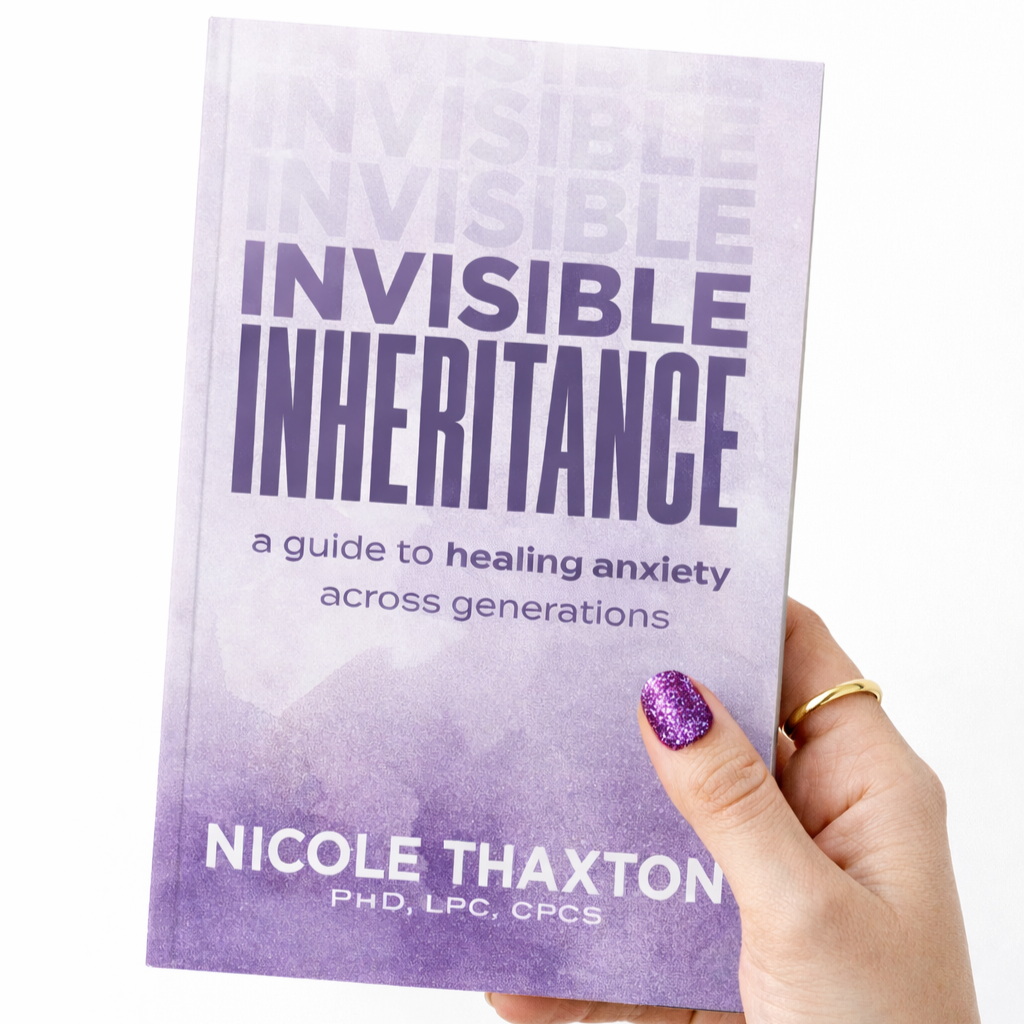
My debut book is available for preorder: Invisible Inheritance: A Guide to Healing Anxiety Across Generations.
I speak to leaders, parents, and (small and large) organizations about emotional endurance, work-life blend, high-functioning anxiety, and sustainable leadership.
If this reflection resonates with your team or community, you can learn more about bringing this work to your organization here:
Thanks for reading! Want more writings and resources?
Here are a few blog posts you might enjoy:
001. Read me if you want more vision casting tips and tools
002. Read me if you're struggling with anxiety
003. Pre-order my debut book now!
004. Join the weekly newsletter for resources, essays, and encouragement.
Disclaimer: This blog is not intended to substitute professional therapeutic advice. Talk with your healthcare provider about your health concerns and before starting or stopping therapies. No content on this site, regardless of date, should ever be used as a substitute for direct professional advice from your doctor or other qualified clinician.