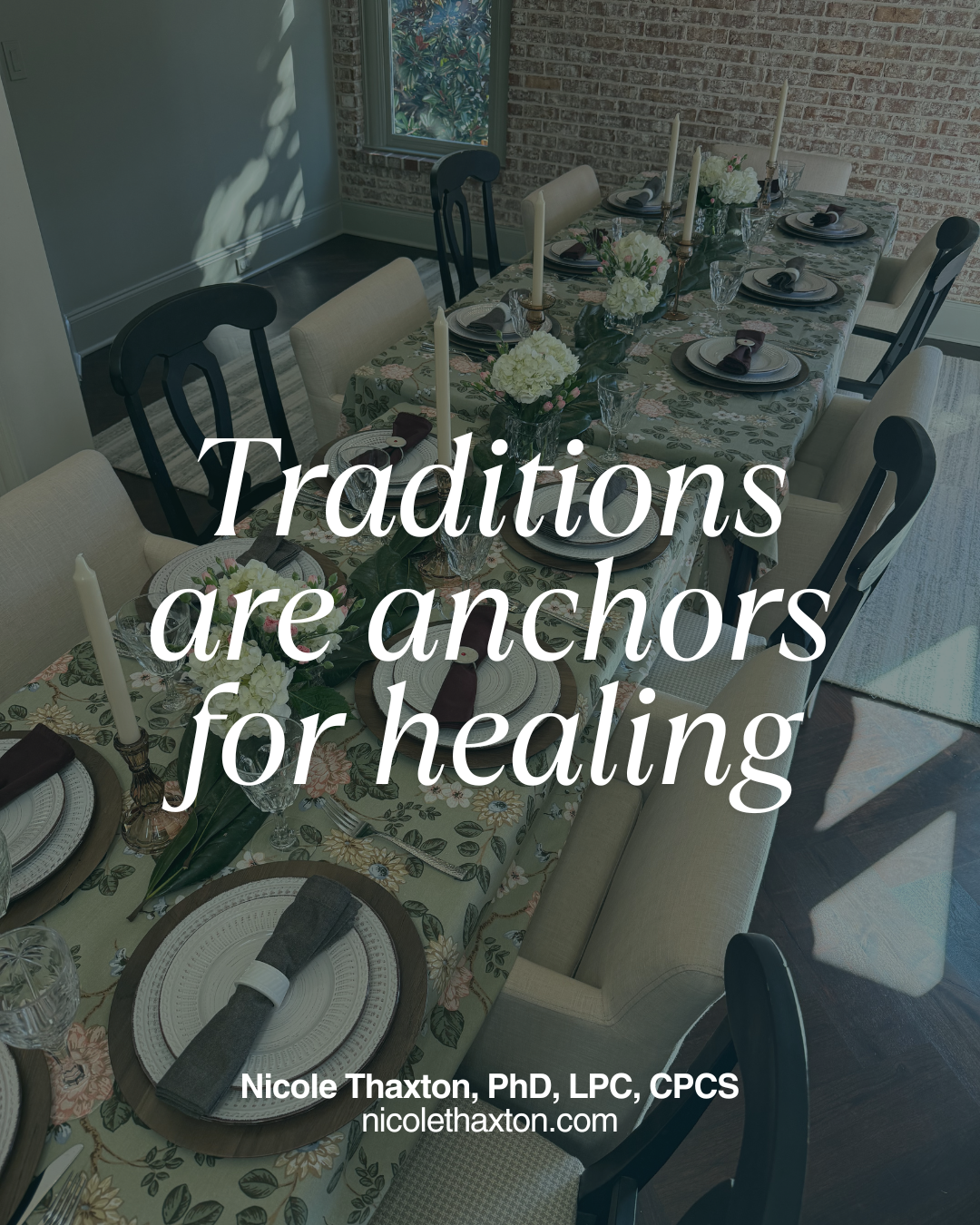
I am, unapologetically, a traditions girlie.
Not the rigid, must-be-done-this-exact-way kind, but the intentional, grounding, come-back-to-yourself kind. The kind that mark time. The kind that your nervous system starts to recognize before your mind even catches up.
This past weekend, we hosted my favorite tradition of the entire year: our annual couples dinner party for my husband RJ’s birthday.
Every year, without fail, we gather around our dining table to celebrate him. And every year, it grounds me in ways I don’t fully understand until I’m standing in the kitchen, setting the table, feeling my body exhale.
This year, we went all in.
Formal dinner settings. Candles. A carefully curated menu. And for the first time ever—a full-blown murder mystery dinner party that I built using ChatGPT, complete with unique character backstories tailored to each guest.
It was joyful. Playful. A little dramatic. And deeply regulating.
And that’s the part I want to talk about.
Traditions as Nervous System Anchors
If you live with anxiety (or high-functioning anxiety) you know how often your nervous system is scanning for what’s next. For danger. For uncertainty. For something that feels off.
Traditions interrupt that constant scanning.
They act as anchors.
When you repeat something year after year, your body learns the pattern before your mind does. Your nervous system starts to recognize:
This is familiar.
This is safe.
I’ve been here before, and I survived.
From a nervous system perspective, predictability equals safety. Rituals and traditions create micro-moments of predictability in an otherwise chaotic world.
They don’t eliminate anxiety, but they soften it. They give your system something steady to hold onto.
For me, this dinner party is one of those anchors.
The Dinner That Grounds Me Every Year
Here’s how the tradition works:
Each year, we invite the same core group of friends and one new couple.
That means most people at the table don’t actually know each other well. Some have only met through this dinner, year after year, watching the group slowly expand.
And yet, there’s an ease to it.
Because the container is familiar—even if the people aren’t.
This year, the murder mystery theme made it even more fun.
Everyone arrived knowing they were stepping into a role. They had something to do, something to embody, something playful to hide behind if small talk felt awkward.
From an anxiety lens, this matters.
Structure creates safety.
When people know what’s expected—what the rhythm of the night will be—their nervous systems relax. Curiosity replaces self-consciousness. Laughter replaces tension.
And community forms faster.
Why Play Is So Healing for Anxious Humans
Anxiety often keeps us in our heads. Play brings us back into our bodies.
Dressing up. Reading a character backstory. Solving a mystery together. These things activate imagination, creativity, and connection—states that are incompatible with chronic hypervigilance.
Play tells your nervous system:
You’re allowed to be here.
You don’t have to perform.
You can just participate.
How I Used ChatGPT to Create Our Murder Mystery Dinner
One of my favorite parts of the night? Every guest’s character was personalized.
Their profession. Their personality. Inside jokes. Relationship dynamics. All woven into a cohesive story.
And yes—I used ChatGPT to help me build it.
If you want to create your own mystery dinner (or any themed gathering), here are a few prompts you can copy and paste:
ChatGPT Prompts to Create Your Own Mystery Dinner Party
1. Build the overall storyline
“Create a murder mystery dinner party storyline set at an elegant formal dinner. Include a central mystery, secret motives, and a dramatic but playful tone.”
2. Generate characters based on real people
“Create unique murder mystery characters for a dinner party. Here are the guests, their relationships, personalities, and professions: [insert details]. Make each character distinct and interconnected.”
3. Assign secrets and motivations
“Give each character a secret, a possible motive, and a personal objective they should try to achieve during the dinner.”
4. Write individual character messages
“Write a private character introduction message for each guest that sets the tone, hints at their secrets, and includes suggested attire.”
5. Create a host guide
“Create a host guide for running a murder mystery dinner party, including timing, how to reveal clues, and how to guide the group to the final reveal.”
Traditions Build Community Without Pressure
One of the quiet gifts of traditions is that they allow relationships to deepen without forcing intimacy.
You don’t have to overshare. You don’t have to be on. You just have to show up.
Over time, trust builds—not because of big moments, but because of repeated ones.
That’s how safety is formed.
That’s how anxiety softens.
If you’re someone who feels anxious, overwhelmed, or disconnected, I want to offer this reframe:
You don’t need a total life overhaul.
You might just need one tradition.
One ritual your body can recognize.
One repeated moment that whispers, “You belong here.”
Maybe it’s an annual dinner. A weekly walk. A birthday ritual. A seasonal gathering.
Start small. Let it evolve. Let it become yours.
Because healing anxiety isn’t always about doing more work.
Sometimes, it’s about returning to what steadies you—again and again.
And letting that be enough.
LATEST NEWS:
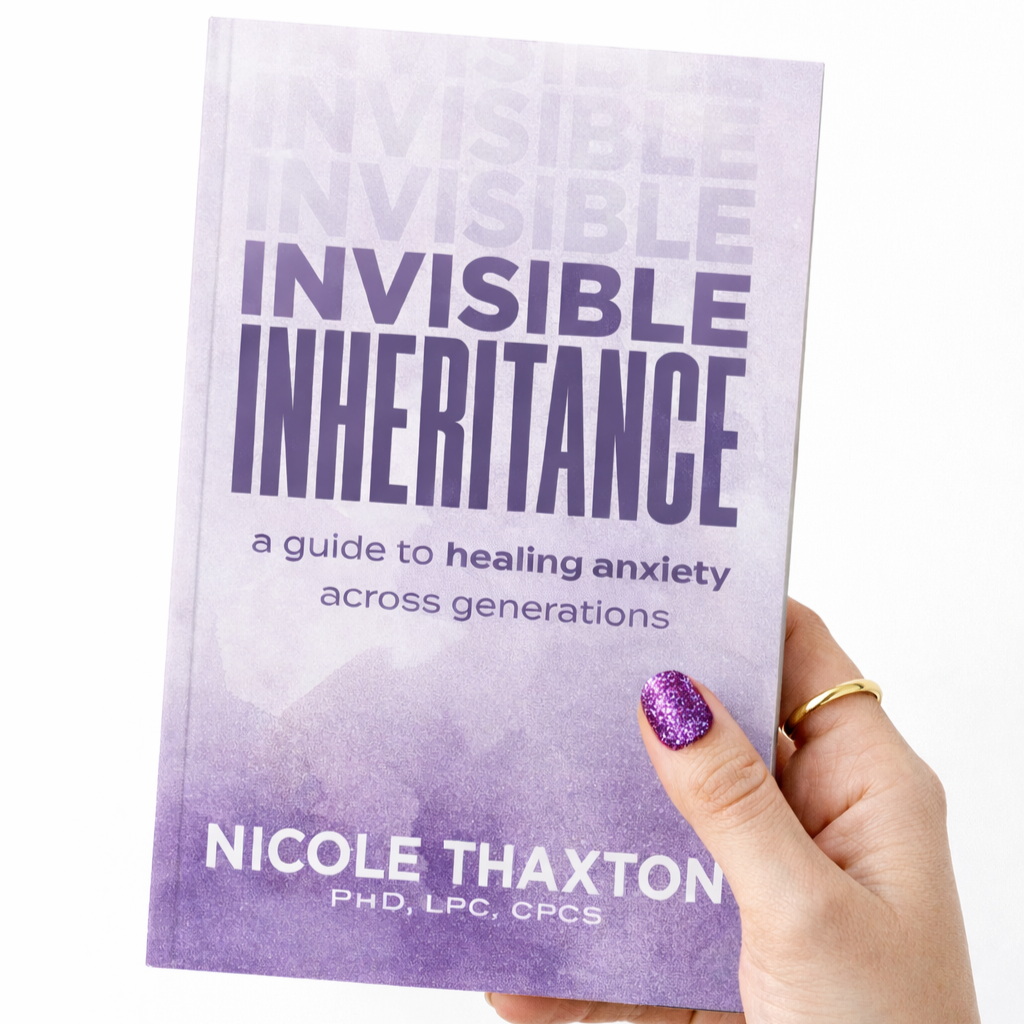
My debut book is available for preorder: Invisible Inheritance: A Guide to Healing Anxiety Across Generations.
I speak to leaders, parents, and (small and large) organizations about emotional endurance, work-life blend, high-functioning anxiety, and sustainable leadership.
If this reflection resonates with your team or community, you can learn more about bringing this work to your organization here:
Thanks for reading! Want more writings and resources?
Here are a few blog posts you might enjoy:
001. Read me if you want more vision casting tips and tools
002. Read me if you're struggling with anxiety
003. Pre-order my debut book now!
004. Join the weekly newsletter for resources, essays, and encouragement.
Disclaimer: This blog is not intended to substitute professional therapeutic advice. Talk with your healthcare provider about your health concerns and before starting or stopping therapies. No content on this site, regardless of date, should ever be used as a substitute for direct professional advice from your doctor or other qualified clinician.